

By Phil Ryan and Ben Keough
A great compact camera should have a relatively large sensor, be small enough for you to carry anywhere, and allow you to capture images that would be impossible to replicate with your smartphone.
Whether that means the architectural details of European cathedrals, your child speeding across a soccer field, or dinner at your favorite restaurant, the Sony RX100 VII is a far better option than your phone’s camera.
Its 8.3x zoom lens makes it a perfect traveling companion, as it’s capable of capturing wide scenic vistas or zooming in for stunning portraits and delightful architectural details.
Plus, its tilting touchscreen makes shooting up high or down low easy, and the physical controls can help even experienced photographers feel at home while teaching novices the art of photography. Best of all, its autofocus tracking is the best we’ve ever seen in a compact camera.
Note: Many of the high-end compact cameras we recommend in this guide are produced in small batches that sell out quickly. These models may be backordered or out of stock at the stores we link to — an unfortunate side effect of the hype surrounding them. However, none have been discontinued, and if you place an order, you will eventually receive a camera. Just be prepared to wait, or buy one used instead.
Everything we recommend
Top pick
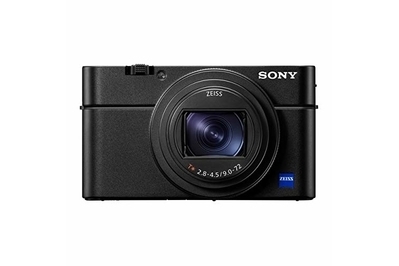
This camera isn’t much bigger than a pack of playing cards, yet it captures beautiful images and video in nearly any situation, offers ample customizable controls, and has a great pop-up viewfinder.
Best for...
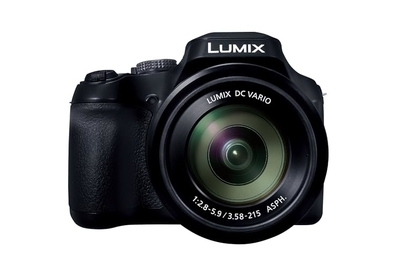
This powerful point-and-shoot provides the best balance of reach, image quality, and features of all the superzooms we’ve tested. However, it lacks weather sealing.
Best for...
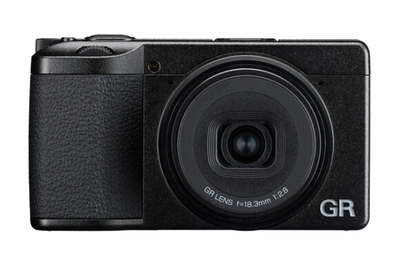
This camera looks like a classic soap-bar-style point-and-shoot but packs a big APS-C sensor and a seriously sharp lens. But it shoots only wide-angle photos, and it lacks a viewfinder.
May be out of stock
Best for...

This retro-styled camera offers loads of tactile control dials, evocative film simulations, and a hybrid optical/electronic viewfinder, all of which combine to create a unique shooting experience.
How we picked
- A large sensor
A bigger sensor gives you superior light-gathering ability for cleaner images and faster shutter speeds, especially in dim conditions.
- A bright lens
A wide aperture allows a lens to capture more light, which improves low-light images and helps make subjects pop.
- Compact design
Image quality is important, but a compact camera’s first job is to be something that you can carry everywhere, so smaller is better.
- Ease of use
A good camera should have ample controls that you can customize. A viewfinder, a tilting screen, and image stabilization are pluses.
Top pick
This camera isn’t much bigger than a pack of playing cards, yet it captures beautiful images and video in nearly any situation, offers ample customizable controls, and has a great pop-up viewfinder.
The Sony RX100 VII is made to handle almost anything you’re likely to photograph (above water, anyway). Whether you’re an experienced photographer and a parent of a champion field-hockey player, or a novice learning more about photography while capturing landscapes of the French countryside, this camera delivers. And it’s a camera that you can grow with as you learn new skills.
Its focus tracking is the best you can find in a compact camera, and its pop-up electronic viewfinder makes composing shots on sunny days easier. Crucially, its 20-megapixel 1-inch sensor delivers sharper images, with more realistic color and better background blur when you want it, than the best smartphone cameras can produce.
The RX100 VII’s 24–200mm lens is both wide enough and long enough to handle the vast majority of photo opportunities. Due to its relatively narrow maximum aperture range, it sacrifices a little background blur and low-light shooting ability in comparison with some larger compact and mirrorless cameras, but its telephoto capabilities and diminutive size make it the best all-around travel companion.
Best for...
This powerful point-and-shoot provides the best balance of reach, image quality, and features of all the superzooms we’ve tested. However, it lacks weather sealing.
If you primarily shoot sports and wildlife but prefer the simplicity and affordability of a point-and-shoot over the complexity, bulk, and cost of an interchangeable-lens camera system, choose the Panasonic Lumix DMC-FZ80D.
This camera’s 60x zoom lens (20–1200mm equivalent) has a much wider range than those of our other picks, providing ample reach for birding, capturing stadium sports, and even documenting your travels (though our other picks are better for long trips, since they’re much more portable).
It edges out the competition in image quality thanks to a lens that lets in a little more light than those of most reasonably priced superzooms. And with its blazing-quick autofocus and burst shooting, you can easily capture fast-moving action. It has a great electronic viewfinder, and its DSLR-like body is both comfortable to hold and stuffed with customizable controls.
Best for...
This camera looks like a classic soap-bar-style point-and-shoot but packs a big APS-C sensor and a seriously sharp lens. But it shoots only wide-angle photos, and it lacks a viewfinder.
May be out of stock
The Ricoh GR IV is the Platonic ideal of a street-photography camera, especially if you like to shoot quickly and covertly. Its minimalist design won’t catch anyone’s attention, you can easily slip it into and out of a pants pocket, and its wide-angle field of view and unique Snap Focus feature let you quickly shoot from the hip. If you want to take more time with your compositions, it’s a great all-around travel camera, too.
But skinny-jeans pocketability comes at a cost: This camera lacks an electronic viewfinder (an optical viewfinder is available separately), its rear display doesn’t tilt, and its wide-angle lens doesn’t zoom.
If you want a narrower, 40mm-equivalent view or a version with a diffusion filter built into the camera, we think that one of the alternate versions of this camera’s predecessor are worth considering.
Best for...
This retro-styled camera offers loads of tactile control dials, evocative film simulations, and a hybrid optical/electronic viewfinder, all of which combine to create a unique shooting experience.
Fujifilm’s X100VI is another popular choice for street photography thanks to its fixed 35mm f/2 lens. But its retro-inspired design pushes you toward a slower, more thoughtful shooting style.
This camera is packed with features not found on most other compact models, including a unique hybrid optical and electronic viewfinder with an electronic rangefinder, a 40-megapixel stabilized APS-C sensor, and Fujifilm’s wide array of film simulations, which aim to re-create classic film stocks in digital form. And it’s encrusted with tactile dials that provide manual control over every aspect of the shooting experience.
It’s quite pricey, especially for a camera that can’t zoom or change lenses, and if you want to pocket it in your jeans, they’d better be JNCOs. But it delivers excellent image quality and an overall shooting experience that no other compact camera can match.
The research
Why you should trust us
Writer Phil Ryan has been covering cameras for Wirecutter since 2017. As the former technical editor for Popular Photography and senior editor for imaging at CNET, he oversaw camera testing and has used the vast majority of the cameras released for over a decade.
Editor Ben Keough has been testing and writing about cameras since 2006 for publications including DigitalCamera-HQ, PentaxForums, and Reviewed.com, in addition to Wirecutter. He is also an avid photographer in his own right, and from time to time people have even paid him to take pictures.
For this guide:
- We spent dozens of hours researching and testing nearly every single non-AliExpress point-and-shoot on the market today, including everything from the $2,870 Sony RX1R II to the Canon PowerShot SX740 HS.
- We carried these cameras around the streets, subways, parks, and beaches of New York City. We toted them around the mountains and deserts of New Mexico and the mean streets of Los Angeles. And we packed them for various vacations, from the US Grand Prix in Austin, Texas, to a five-city tour of Japan.
- We scanned endless forum discussions, Reddit threads, and YouTube reviews of the latest and greatest digital point-and-shoots to make sure we didn’t have any blind spots for fatal flaws.
- Like all Wirecutter journalists, we review and test products with complete editorial independence. I’m never made aware of any business implications of my editorial recommendations. Read more about our editorial standards.
Who this is for
If you own a recent smartphone, you have a pretty good camera in your pocket right now. But it has limitations: If you look at your photos on anything bigger than a phone screen, you see blurry, blocky results that are far from the shots you’d get from a DSLR or mirrorless camera. And using digital zoom only makes smartphone image quality worse.
If you’re frustrated by these limitations, here’s why an advanced compact camera is probably right for you:
- Better image quality: These cameras use much larger image sensors than phones do, offering correspondingly improved image quality — especially indoors or when the sun goes down, thanks to better low-light performance.
- Smartphone-like shooting: Most advanced point-and-shoots give you a touchscreen interface for changing essential settings and choosing your focus point, which makes the step up from smartphone photography even smoother.
- Room to grow: Although you can just pick up one of these cameras, point, and shoot, they also include all the custom controls you’d get from more-expensive DSLRs and mirrorless cameras. They’re a great way to start if you’re just beginning to get serious about photography.
- Still portable: These cameras are bigger than phones, but they’re still compact enough to slip into a jeans or jacket pocket, or a small bag, without weighing you down. Their large sensors and wide-aperture zoom lenses capture lots of light, providing most of the power of a full DSLR or mirrorless system without the bulk of a larger body and a set of lenses.
- More flexible than a phone: Most cameras in this category offer versatile 3x zoom lenses that go from wide-angle to portrait focal lengths without degrading the image quality. They can also track moving subjects like sports, kids, and pets. Many also provide nifty extras, such as a flip-up screen or an electronic viewfinder, that make shooting easier.
So why not just buy a DSLR or mirrorless camera? After all, those models can provide even better images and video, more-comfortable ergonomics, and more physical controls.
The answer, of course, is size and weight. Mirrorless cameras and DSLRs require a bigger bag, and their added weight can give you a sore neck or shoulder over a long day of shooting.
Note that as smartphones have become ubiquitous, point-and-shoot cameras — especially cheap ones — have dropped out of camera manufacturers’ lineups. What’s left are mostly enthusiast-oriented, large-sensor compact cameras that are far more expensive than the nearly disposable pocket cameras of yore.
Today’s best point-and-shoots cost as much as many mirrorless cameras, which can be a tough pill to swallow considering that these models lack interchangeable lenses and in some cases can’t even zoom. But their portability, image quality, and ability to help center you on the process of image-making can nevertheless make them a great value for the right photographer.
How we picked and tested


To find the best point-and-shoot cameras, we started out by establishing key traits that any great camera should possess.
- Large sensor: Since we’re looking for cameras that provide significantly better image quality than a smartphone can produce, it makes sense for us to prioritize a significantly larger sensor. All else being equal, a larger sensor can capture more light, which reduces image noise and increases dynamic range. For this guide we looked for a 1-inch or larger sensor for most cameras or a 1/2.3-inch or larger sensor for superzooms, due to their unique design.
- Wide-aperture lens: To make the most of their big sensors, these cameras should have lenses with a wide aperture throughout the zoom range — the wider, the better. A wide aperture lets in more light, which allows you to shoot at a lower ISO setting (reducing image noise) or a higher shutter speed (reducing blur). It also allows you to shoot portrait photos with more pronounced blur (or bokeh) behind your subject.
- Compact design: A good point-and-shoot camera is one that you can comfortably carry every day, which means (superzooms aside) it should fit in a pants or jacket pocket or perhaps a small bag.
- Ease of use: All of the cameras in this guide are easy to use in auto mode, but if you choose to dive into the menus, they should be easy to navigate. The camera should also offer a quick menu for convenient access to key settings, plus customizable buttons and dials that allow you to set up the camera for the way you like to shoot.
- Touchscreen, tilt screen, or electronic viewfinder: These features add usability to any camera, so having one or more is a big plus. Touchscreens let you tap to focus and scroll through menus or swipe through photos with your finger. Tilt screens allow you to easily shoot below or above your head, and they sometimes flip 180 degrees for selfies. Electronic viewfinders make it easier for you to compose shots on especially bright days, when glare wipes out the image on the rear display.
- Wireless connectivity: These cameras should have a way to connect directly to your phone in order to receive firmware updates, transfer photos, and shoot using your phone or tablet as a remote control.
- Solid video specs: Any modern camera should be able to record video at a bare minimum of 1080p resolution and 60 frames per second, and 4K or higher is ideal. Other extras, such as uncompressed HDMI output, ports for mics and headphones, and advanced video-codec options are icing on the cake.
With the above criteria in mind, we canvassed the available options and called in the most promising contenders, including 1-inch-sensor cameras from Panasonic and Sony, fixed-focal APS-C compact models from Fujifilm and Ricoh, and superzooms with large sensors, large apertures, or both.


We assessed these cameras both in head-to-head studio tests and on extended outings in the real world. We carried them on a drive through the forests and rivers of Bend, Oregon; a hike amid the majestic sweep of the Colorado Rockies; dog walks in Santa Fe, New Mexico and Los Angeles; an extended vacation through five cities in Japan; and the streets and subways of New York City.
With people who are taking their first step up from a smartphone camera in mind, we focused on testing for anything that might frustrate, annoy, or otherwise put off newcomers from using these cameras. We examined the usability of each camera’s menu system and on-screen info, the responsiveness of its touchscreen, the tactile feel of its buttons, and — especially for cameras with an electronic viewfinder — how easy or difficult the controls were to find and operate by feel.
We performed image-quality tests for things such as sharpness, bokeh, close-focusing ability, low-light performance, and dynamic range. We also considered the effectiveness of image stabilization and autofocus.
Finally, we connected each camera to our smartphones to see whether remote shooting and image transfer were a pain or a pleasure.
Top pick: Sony RX100 VII


Top pick
This camera isn’t much bigger than a pack of playing cards, yet it captures beautiful images and video in nearly any situation, offers ample customizable controls, and has a great pop-up viewfinder.
If you’re interested in a small camera that can definitively outclass the one built into your smartphone, the Sony RX100 VII is a great choice. Its 24–200mm lens covers a huge range of shooting situations, its electronic viewfinder lets you easily frame shots on sunny days, its quick autofocus can reliably track fast-moving subjects, and its video quality is the best you can expect from a compact camera.
It might seem like a lot of camera (and money) if you’re just stepping up from a smartphone. But its perks — faster and longer burst shooting, quicker focusing, and a longer lens — are worth the price if you’re serious about photography.
The RX100 VII delivers excellent photos. In our tests, its 1-inch, 20-megapixel sensor produced sharp JPEGs with a pleasing amount of contrast and saturation. And if you shoot raw, you’ll find that its files are quite malleable — you can control every aspect of the final image when you develop it in software.
Its 8.3x zoom lens covers a lot of ground. The 24–200mm lens has a narrower maximum aperture at full zoom than we’d like, but it still has a wider maximum aperture than you can get from the lenses of cheap compact cameras, and its long zoom range makes this model one of the best travel cameras you can buy.
Its pop-up electronic viewfinder helps in bright light. One of the coolest things about the RX100 VII is Sony’s pop-up EVF — an excellent addition for people who get frustrated by their phone screen in bright daylight or just prefer eye-level composition over framing shots on the rear display.
Considering the overall size of the camera, the EVF is remarkably large and clear, and its retracting design is clever. The EVF makes shooting in dark environments more discreet, since the camera’s rear display doesn’t light up when the EVF is in use.
Its 4K video looks great. The RX100 VII shoots 4K video at up to 30 frames per second and a 100 Mbps bit rate. Sony offers a variety of formats and codecs, including its proprietary XAVC S.
In our tests, this Sony camera’s video footage was sharp in both its 4K and 1080p 60 fps recording modes. XAVC S footage looks best but requires a Class-10 SDXC/SDHC card with at least 64 GB of storage. We used a SanDisk Extreme Pro SDXC UHS-II card, which worked flawlessly for us but doesn’t come cheap.
Its video is versatile. Although 4K footage is slightly cropped, you can still shoot great wide-angle footage capturing spontaneous moments — say, your baby crawling. And the RX100 VII can go up to 960 fps (albeit for only two seconds at a time and at reduced resolution) to create 32x ultra-slow-motion footage like clips of your dog jumping or a race car’s exhaust backfiring.
It can also output live, uncompressed 4K video via its HDMI port — perfect for YouTube and Twitch streamers.
It’s delightfully small. The RX100 VII basically lived in a jacket pocket and tagged along everywhere during our testing. At 4 by 2.29 by 1.69 inches, it has a smaller footprint than most smartphones but is significantly thicker. It’s about 0.4 inch thicker than Ricoh’s GR IV but a little less wide and tall. Fujifilm’s X100VI is larger and heavier than both rivals.
You can wirelessly transfer photos to your phone. Sony’s smartphone app, Imaging Edge Mobile (iOS, Android), makes pairing your phone to the camera fairly simple: A QR code appears on the camera’s screen, and you scan it using the app on your phone.
Once the two devices are connected, you can control the camera remotely and transfer photos and video to your phone. Like a lot of compact cameras, the RX100 VII is limited in what it can transfer; it can’t send raw photos, AVCHD videos, or particularly high-bit-rate XAVC S videos to your phone. But for most people, the JPEGs and lower-bit-rate video that it can transfer will suffice for Instagram and Facebook.
Flaws but not dealbreakers
It isn’t weather-sealed. That means you’ll have to be careful about using it in anything more than a drizzle or in heavily dusty or sandy conditions.
Tiny controls are a pain for big hands. The RX100 VII offers plenty of controls, including customizable buttons, but the camera’s compact design requires many of them to be small. As a result, they can be tough for you to find by feel, without taking your eye away from the viewfinder.
Battery life could be better. The battery is compact, and while its 260-shot capacity is marginally better than the Ricoh GR IV’s 250 shots, having an extra battery on hand, if possible, is still a good idea.
There’s no hot shoe. You can’t add a flash, a camera-mounted microphone, or a third-party thumb grip. That said, a small pop-up flash is built in. It’s powerful enough for fill light but doesn’t provide effective coverage past the midpoint of the zoom range.
Best for photographing distant subjects: Panasonic Lumix DMC-FZ80D


Best for...
This powerful point-and-shoot provides the best balance of reach, image quality, and features of all the superzooms we’ve tested. However, it lacks weather sealing.
The Panasonic Lumix DMC-FZ80D provides a lot of zoom range (more than we think is really necessary), with a view that’s wider than an iPhone’s main camera at its widest end (20mm) and longer than what you need to photograph an eclipse at the long end (1200mm).
But despite its excessive telephoto capability, which can often lead to image degradation at longer focal lengths, in our testing the FZ80D demonstrated the best combination of image quality, usability, portability, and affordability you can currently get in this class of camera.
Its photos look great. In our tests, we captured pleasingly sharp images zoomed as far as an 800mm equivalent focal length, even when going for tightly framed shots of small birds on an overcast day. Zooming farther, you’re likely to notice some falloff in sharpness, but on a brighter day you’ll still get images that are good enough to share.
Plus, the images from this camera have a pleasingly neutral look that gives you room to apply your own post-processing.
It can capture raw files. If you’re willing to take the time to edit the FZ80D’s raw files with Adobe Lightroom or another editing suite, you can fine-tune your images with noise reduction, sharpening, and color balance that reflect your personal vision.
Video is as good as you can expect from a superzoom. The FZ80D can record video at up to 4K resolution at 30 frames per second, and the 100 Mbps maximum bit rate captures plenty of detail. This camera’s size, reliable focus tracking, and optical stabilization make it a compelling option for capturing video if extreme telephoto reach is absolutely necessary for what you want to shoot.
Its autofocus is fast and accurate. With autofocus set to continuous mode and with subject tracking selected, the FZ80D holds focus even on fast-moving subjects such as cars and running dogs. It initially locks on the subject very quickly, and though you may encounter a few frames with missed focus, especially if your subject moves erratically, in our tests it had fewer misses than its competitors.
It has a high-resolution electronic viewfinder, but its rear display doesn’t tilt. The contrasty, vibrant OLED EVF was a welcome relief when we were out on a sunny day, and the rear touchscreen also stood up well in bright light. But the screen neither tilts nor flips out to the side, so selfies might be a little problematic.
That lack of flexibility is one of the FZ80D’s major drawbacks; you might want to consider the Canon PowerShot SX70 HS if selfie shooting and vlogging are especially important to you.
It has a comfortable grip and a good control system. The FZ80D’s sculpted grip made it a joy to hold. We also love the array of customizable function buttons (four physical, plus five more on-screen) and the lone command dial, which you can set for one-touch access to dozens of shooting settings.
Though the dial is not labeled as such, you can press it in and click it for easy access to exposure compensation, which is a quick way to brighten or darken an image when you’re shooting in aperture- or shutter-priority mode.
Panasonic’s unique 4K Photo and Post Focus modes are legitimately helpful. 4K Photo mode augments the camera’s 10 fps burst capabilities, shooting 4K video clips at 30 fps and then letting you extract the best frames as 8-megapixel still photos.
Post Focus leverages the 4K Photo technique to capture a one-second burst of 30 shots at different focus points, after which you can tap the screen to choose what to focus on. Obviously, this function really works only with static subjects, but it’s a nifty trick nonetheless.


Flaws but not dealbreakers
It’s not dust- or splash-resistant. The FZ80D lacks any kind of weather sealing, so water and dust can reach the sensor and other sensitive components. As a result, you should be careful when using it at the beach or at rainy football games.
You should carry an extra battery. As with almost all compact cameras, the FZ80D’s battery life leaves a lot to be desired at 300 shots per charge (or 220 when using the EVF). However, you can charge the battery in-camera via USB-C adapter, which means you can top it off with a portable charger and likely use the same power adapter you do for your phone. Even so, you’ll probably want to have an extra battery ready.
Best for street photography: Ricoh GR IV


Best for...
This camera looks like a classic soap-bar-style point-and-shoot but packs a big APS-C sensor and a seriously sharp lens. But it shoots only wide-angle photos, and it lacks a viewfinder.
May be out of stock
If you want a camera that fits in a tight pants pocket yet delivers image quality rivaling that of many mirrorless cameras, the Ricoh GR IV is your best bet. This compact powerhouse is beloved by street shooters because its anonymous looks, compact design, sharp wide-angle lens, and unique Snap Focus mode allow for quick, covert shooting. But even if you’re not a street photographer, its portability and image quality make it an attractive option for lightweight travel.
Of course, the slim design means you lose a few features that our other picks offer. You won’t find an electronic viewfinder or a tilting screen here, and the lens doesn’t zoom. This camera isn’t weather-sealed, either, so you need to treat it with care, avoiding heavy rain, blowing dust, and the like. If those features are more important to you than extreme pocketability, the Fujifilm X100VI might be a better choice.
It produces beautiful photos. The GR IV provides crisp images at any f-stop, and it can focus remarkably close in macro mode — as close as 2.4 inches. Surprisingly, for a lens that opens only to f/2.8, it also makes lovely close-focus portraits with beautifully blurred backgrounds.
Raw images and JPEGs made with the Standard image-control mode exhibited accurate color and pleasing contrast. Though you won’t get sunstars, flare was well controlled when we shot against bright light (something that the more expensive Fujifilm X100VI struggled with).
Their JPEG output is excellent, even without editing. Like the Fujifilm X100VI, the Ricoh GR IV has fun alternative JPEG shooting modes, and lets you create or load custom “recipes” for unique looks.
The preloaded options include common options such as Vivid and Monotone, plus more esoteric choices like Cinema Yellow and Cinema Green (that try to mimic classic movie film) or Positive Film (which produces especially hard contrast and slightly desaturated colors). You can tweak these presets to create your own recipes by changing things like saturation, hue, high- and low-key lighting, contrast (overall, highlight, and shadow), sharpness, shading, and clarity.
They’re a pleasure to shoot with. The GR IV ranks among the few serious cameras that you can use with one hand, thanks to intelligently placed control dials, a handy rocker switch for exposure compensation and menu navigation, and a well-designed touchscreen interface (if you choose to use it).
Extensive customization lets you arrange your most-used settings so they are just a button press away. Plus, three User modes let you access custom shooting profiles for different situations — say, a Soft Monotone mode with Snap Focus enabled for street shooting on an overcast day, or Negative Film with JPEG only for casual beach snaps with a retro vibe.
Snap Focus is a godsend when you’re shooting from the hip. One of the GR series’ calling cards is its unique Snap Focus feature. This mode lets you preset the focus distance (anywhere from 0.3 to 5 meters, or even infinity) and simply mash the shutter button (skipping the usual half-press-to-focus) to quickly capture a shot. For street photography, where the decisive moment can come and go in a flash, this feature is a game-changer.
Crop modes and conversion lenses can compensate for its fixed focal length. If you want to shoot at something other than the 28mm, you can set the camera to crop the image to an equivalent of a 35mm or 50mm view as you shoot.
You can also change the field of view to 21mm with a wide conversion lens and an adapter. The adapter lets you mount 49mm filters.The downside, of course, is that the conversion lens adds considerable bulk to a camera whose portability is its selling point.


It puts the “compact” in “compact camera.” The GR IV measures just 4.29 by 2.41 by 1.3 inches. Our top pick, the Sony RX100 VII, is slightly smaller in width and height but thicker at 1.69 inches. Four-tenths of an inch might not sound like a lot, but it can mean the difference between a comfortable fit and a struggle, or carrying your camera in a pants pocket versus a looser jacket pocket. Compared with the specs for the Fujifilm X100VI, which is 5.04 by 2.95 by 2.18 inches, the GR IV is positively minuscule.
Flaws but not dealbreakers
Battery life is a real pain point. The GR IV’s stated battery life of 250 shots per charge is the lowest of any camera we recommend here, and our real-world experience showed that actually getting to that number is unlikely — we averaged around 150 shots before the battery went kaput.
If you buy this camera, invest in some extra batteries and a wall charger, or you’ll regret it. You can also charge the camera with a USB-C power bank on the go, though.
Autofocus is another weak point. It’s sufficient for static subjects — landscapes, still life, portraiture — but it’s slow compared with the AF in competing cameras, and you can forget about trying to track moving subjects. Snap Focus can assist in this regard, but it isn’t a great option for every kind of photography.
The less that’s said about the GR IV’s video quality, the better. Its footage is shaky, blocky, generally unattractive, and limited to just 1080p at 60 frames per second. Even our top pick from Sony, which debuted six years before the Ricoh GR IV, offers 4K video.
Beware of dust. The GR series has always had issues with dust ending up on the image sensor. Because the lens lacks weather-sealing and extends and retracts when you power it on and off, it acts like a bellows and can suck small dust particles inside — many of which evade a gasket that’s supposed to keep them at bay.
If this problem strikes your camera, you can have it serviced to remove the dust (not cheap once the camera is out of warranty), you can attempt a DIY repair, or you can clone the spots out via software.
Best compact, fixed-focal camera with a viewfinder: Fujifilm X100VI


Best for...
This retro-styled camera offers loads of tactile control dials, evocative film simulations, and a hybrid optical/electronic viewfinder, all of which combine to create a unique shooting experience.
If you want a compact camera that can rival the Ricoh GR IV in image quality, but run-and-gun shooting isn’t your style, the Fujifilm X100VI is a great way to go. Though it offers a powerful blend of cutting-edge tech, including a 40-megapixel stabilized APS-C sensor and a high-resolution hybrid viewfinder, its old-school design and its array of 20 nostalgic film simulations truly set it apart.
This camera has a 35mm-equivalent f/2 lens that doesn’t zoom and emphasizes manual control and aesthetic creativity. This encourages a slower, more contemplative shooting experience that may suit some photographers better than the GR series’s shoot-from-the-hip style. And the film simulations — while great on their own — allow you to extensively tweak them to create your own unique visual identity.
It has almost everything you can ask for in a high-end compact camera. In many ways, the X100VI plus-ones most of what the Ricoh GR IV offers: higher resolution, a tilting screen, a longer focal length, and weather sealing (though the lens requires an adapter ring and filter for full protection). However, it also costs about $350 more than the GR IV and is significantly larger.


The retro appeal is real. The X100VI has a design that recalls film-era Fujica cameras, as well as iconic rangefinders from Leica and other legacy brands. It’s made from aluminum and has pleasingly tactile dials for every major adjustment, including aperture, shutter speed, ISO, and exposure compensation. We can’t say exactly why, but we find those dials more satisfying than turning a DSLR-style control wheel.
Just be aware that its Leica-esque looks make it more conspicuous in use than the GR IV.
But that old-school design brings some compromises. Like the film cameras it emulates, the X100VI isn’t very ergonomic. It’s a metal brick, with a minimal grip around the front and little purchase for your thumb on the rear.
You can fix that by adding accessories — a thumb grip that mounts at the hot shoe, a front grip that screws into the tripod mount, and so on. But this is already an expensive camera, and those extras add bulk and cost.
Its image quality is similar to that of our top mirrorless camera pick. The X100VI uses Fujifilm’s APS-C–sized X-Trans V HR (high-resolution) 40.2-megapixel backside-illuminated sensor — the same sensor found in the company’s X-T5, which we recommend in our guide to mirrorless cameras. While some full-frame mirrorless models offer upward of 60 megapixels, we think that’s overkill.
The high-resolution sensor in the X100VI also allows for two digital teleconverter modes that crop the image to extend the focal length to 50mm (at 20 megapixels) or 70mm (10 megapixels) — handy if you don’t want to make the camera bulkier with conversion lenses. (more on that below).


The sensor is stabilized, too, providing up to six stops of compensation for hand movement. That means you can shoot in very dim environments with slow shutter speeds and still get crisp results.
Fujifilm’s film simulations are a joy to use. Beyond this camera’s retro styling, Fujifilm’s film simulations are its sharpest hook. In many cases, they’re named after iconic film stocks from the late 20th century — think Astia, Provia, and Velvia. These modes try to emulate the characteristics of film in digital form and let you get pleasing JPEGs that don’t require extensive post-processing.
You can make your own, too. But perhaps the coolest and most addictive thing about Fujifilm’s film simulations is that you can create your own. The X100VI offers seven custom shooting modes in which you can tweak one of the stock film sims, adjusting the dynamic range, white balance, saturation, sharpness, shadow and highlight adjustments, and much more.
Hundreds of user-created recipes are available online too, if you’d prefer to just load a sim and start shooting.


The hybrid viewfinder and the tilting screen add versatility. The X100VI features a unique hybrid viewfinder — simply pull a lever on the front of the camera, and it switches between optical and electronic. In optical mode the viewfinder also offers a smaller, inset electronic rangefinder view that lets you punch in on your point of focus, plus review the shot you’ve just taken.
The rear display tilts up 90 degrees for shooting at low angles or down 45 degrees for shooting over your head — something you can’t do with the GR IV’s fixed screen..


It has an array of add-on accessories. In addition to the aforementioned adapter ring and protective filter, available add-ons include a telephoto conversion lens that narrows the focal length to 50mm, a wide conversion lens that expands it to 28mm, and a lens hood that may help a bit with flare.
Flaws but not dealbreakers
The lens could be better. It’s pretty soft wide open, especially when shooting near its minimum focus distance, and flares badly when you’re shooting with the sun or other bright lights anywhere near the frame. But stopped down, it’s very sharp, and wider apertures have an old-school rendering evocative of film rangefinders.
It still fits in a jacket pocket. Although the X100VI is a compact camera, it’s significantly chunkier than our other fixed-focal APS-C pick. To be specific, it’s about 17% wider, 21% taller, and a whopping 61% thicker (largely because the lens doesn’t retract). Here’s a visual size comparison with the earlier GR III, which is nearly identical in size to the GR IV. So while the X100VI still fits comfortably in a jacket pocket, tucking it into jeans is probably a no-go.
The video quality is very good, but this is primarily a stills camera. You can shoot at up to 6.2K resolution at 30 fps with a slight crop or drop to 4K 60 fps with an even smaller crop. You can even record in an F-Log2 profile with more than 14 stops of dynamic range, use in-body image stabilization, and employ subject-tracking AF.
But you’re still stuck with one lens, and the camera is saddled with a Micro HDMI port. There’s no 3.5 mm audio jack, either, so you can’t add a mic. Worse, to switch between stills and video you need to go menu-diving — there’s no physical switch.
What to look forward to
We will be testing the Sony RX1R III, a successor to the RX1R II, early this year. This camera packs a 61-megapixel full-frame sensor, a high-resolution viewfinder, and a 35mm f/2 Zeiss lens, and it competes primarily with Leica’s Q-series cameras as an ultra-premium everyday-carry camera. While we love these cameras, they are outrageously expensive — the RX1R III costs about $5,100 — so we don’t think they’re a great choice for most photographers. But we’ll investigate for those who are curious about its potential.
Other point-and-shoot cameras worth considering
If you like the idea of the Ricoh GR IV but prefer a field of view closer to that of a classic “normal” lens: Ricoh is still producing last generation’s GR IIIx. It’s almost exactly the same camera as the discontinued GR III, but with a 40mm-equivalent lens.
Compared with the GR IV we recommend, it has a very slightly lower resolution sensor (24 megapixels), uses an older (but still effective) version of shake reduction, has a slightly different control scheme, and doesn’t include the Cinema Yellow and Cinema Green film modes. However, the overall shooting experience is quite similar.
If you want a GR camera with a built-in optical diffuser: Ricoh also makes the GR III HDF and GR IIIx HDF. These variants replace the GR III’s built-in neutral density filter with a highlight diffusion filter that you can switch on for a dreamy, old-school look.
If you just want the best superzoom: The Sony RX10 IV puts an impressively sharp 24–600mm f/2.4–4 lens in front of a 1-inch sensor to make images that best those of the Panasonic FZ80D while offering more zoom than the FZ1000 II.
Its tracking autofocus isn’t quite as nice as that of the newer Sony RX100 VII, but it’s still plenty fast and capable of tracking subjects even more doggedly than the AF in the FZ80D. The RX10 IV is also more comfortable to hold than the FZ80D and has a nicer electronic viewfinder and a higher-res rear display.
The catch: It weighs more than twice as much as our superzoom pick and costs about three times as much. If that doesn’t make you wince, this model is worth considering.
If you value fun over money: The Fujifilm X Half is a unique, incredibly fun camera that puts a strong focus on simply enjoying the act of making images.
The tiny camera is equipped with a vertical-orientation (portrait) 1-inch sensor and a moderately wide-angle prime lens. It includes a unique “film camera” mode where you’re locked into using a single film simulation for a “roll” of images (there’s even a film advance lever), and it’s paired with an app that “develops” them when you’re done. And it can also make diptychs, pairing two vertical images in a single file.
But while it’s a lot of fun, there are downsides: The image quality is just okay, thanks to the smaller sensor. It’s small and lightweight, but it also feels a bit cheap as a result. And its $850 asking price feels like highway robbery given the previous two points. But if you have a lot of money burning a hole in your pocket and love the retro aesthetic, it’s a blast to shoot with.
The competition
This is not a comprehensive list of all point-and-shoot cameras we have tested. We have removed cameras that are discontinued or no longer meet our criteria.
The Canon PowerShot G7 X Mark III lacks an EVF, and the otherwise similar Sony RX100 VII provides a better video experience.
The Canon PowerShot SX70 HS was a pick in our standalone guide to superzoom cameras thanks to its 21–1365mm lens, which reaches a little further than the FZ80D’s 1200mm design. However, since it doesn’t let in as much light as the FZ80D, its images are not as nice, and its limited feature set leaves you less room for growth as a photographer.
The Fujifilm GFX100RF is the world’s first digital medium-format point-and-shoot, and it’s a camera we really enjoyed using. It features a 100-megapixel medium-format sensor paired with a 28mm-equivalent f/4 prime lens, and it has a lot of fun features, including a unique aspect-ratio dial that allows you to quickly switch to shooting square or even ultra-wide XPan-style photos. However, at $5,600 at this writing, it’s far too expensive for most people to even consider.
The Nikon P1100 is a ridiculously large (5.8 by 4.7 by 7.2 inches before the zoom lens extends) and heavy (3.1 pounds) superzoom that offers a frankly ludicrous maximum focal length of 3000mm. However, that extreme telephoto capability comes with serious caveats.
The P1100’s small sensor makes nice images under ideal conditions, but the 125x 24–3000mm f/2.8–8 lens is very dim at the far end. That means that you’ll need to use a relatively high ISO to get shutter speeds that will keep up with any kind of fast action, leading to images with lots of noise (or smeary noise reduction).
The Sony RX1R II is a full-frame 42-megapixel compact camera with a 35mm f/2 lens that’s capable of creating genuinely stunning images. It has a pop-up EVF like the RX100 VII, and though this model’s tilting screen isn’t a touchscreen, it’s higher-res than the one in that camera. The grip is anemic, as is the 220-shot battery life (which shrinks to 110 shots if you use only the EVF to frame photos).
Still, even though this model has been replaced by Sony’s new, even pricier RX1R III, truly dedicated photo nerds might consider getting one, especially used, as it’s the only other option for a full-frame compact camera aside from Leica’s Q2 Monochrom, Q3, or Q3 43.
This article was edited by Ben Keough and Erica Ogg.
Meet your guides

Phil Ryan
I’m based in New York City, and I spend most of my time testing and writing about cameras and lenses and all of the equipment that goes along with making photos. If I’m not up at dawn searching for birds, I might be wandering the streets of the city looking for the perfect sample image or capturing video that might trip up the encoding algorithms of these amazing machines.

Ben Keough is the supervising editor for Wirecutter's working from home, powering, cameras, and hobbies and games coverage. He previously spent more than a decade writing about cameras, printers, and other office equipment for Wirecutter, Reviewed, USA Today, and Digital Camera HQ. After four years testing printers, he definitively confirmed that they all suck, but some suck less than others.
Further reading
The First New Film Camera in 20 Years Was Just Released. Our Photo Experts Think It’s Fascinating.
by Phil Ryan
The Pentax 17 is a bold experiment: a brand-new, $500 film camera with a quirky design. Can it survive—and even thrive—in a digital world?Gen Z Is Bringing Back “Vintage” Point-and-Shoot Cameras. Our Experts Weigh In.
by Annemarie Conte
Vintage compact point-and-shoot cameras are all the rage. Here’s how to get one of your own or something you might like even better.
If You’re Giving Someone a Digital Camera, Make Sure to Include This $8 Doodad, Too
by Elissa Sanci
Transferring photos and videos from a point-and-shoot camera to a phone is a drag. This cheap memory card adapter makes it a breeze.What My Vintage Digital Camera Obsession Has Taught Me
by Ben Keough
Before you go digging for hidden gems in the graveyard of digital camera history, heed these warnings.


Advertisement
SKIP ADVERTISEMENT